
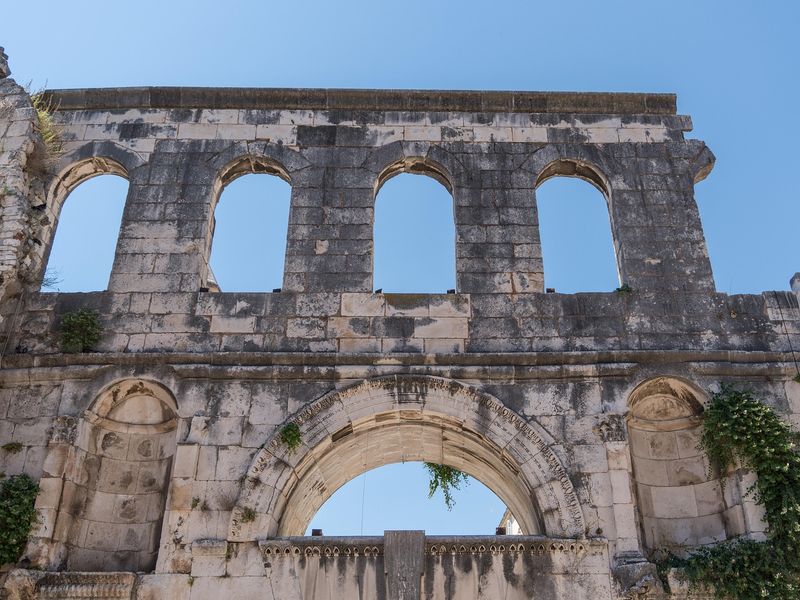
Hotels around Split
Tap the map for prices and availability.
About Split
Split Pride is Croatia's second Pride march after Zagreb, and its history is still well remembered in the city. At the first march around three hundred people took to the streets. They were met by roughly ten thousand counter-protesters who threw stones, bottles, cans and tear gas. Several activists and reporters suffered minor injuries, police arrested hundreds of attackers, and the march had to be called off. Afterwards the police were criticised for failing to protect the participants.
The following year marked a turning point. About seven hundred people marched under heavy police protection, several government ministers and the then president backed the event, and it passed without violence. Soon after, the mayor of Split became the first Croatian mayor to join a Pride march. Since then the marches have been peaceful, and the current mayor has also spoken in support of them.
The first march was organised by the Zagreb groups Kontra and Iskorak together with the feminist organisation Domine. Later the Split association Rišpet took over; it has since been dissolved. Today the LGBT Centar Split runs Pride. What began as a single march day has grown into a Pride month in June with drag nights, workshops, talks on PrEP and PEP, exhibitions and film screenings. It ends with the march itself, which starts and finishes in Đardin park, followed by a concert and an after-party.
The focus has shifted over time, away from visibility alone and towards street violence, schools and education, and the gap between the law and daily life. In Croatia same-sex couples can enter a life partnership that is equal to marriage in many areas. Marriage itself is reserved for a man and a woman by the constitution.

From the magazine
Toronto 1981: The Bathhouse Raids and the Protests Behind Toronto Pride
On 5 February 1981 Toronto police raided four gay bathhouses and arrested close to 300 men. What happened, how the sources count it, and how the protests connect to Toronto Pride.
Reading the ILGA-Europe Rainbow Map: What the Ranking Measures and What It Does Not
Every May ILGA-Europe colours in Europe. How the Rainbow Map is built, what the 2026 edition shows and why it is not a travel guide.
Section 28: Britain's Law Against "Promoting Homosexuality" (1988 to 2003)
Section 28 barred British local authorities from "promoting" homosexuality. What the law said, how it shaped schools, how people protested it and when it was repealed.