On the night of 5 February 1981, Toronto police raided four gay bathhouses. By morning, close to 300 men had been arrested, and the next day crowds marched through the city's streets. Historians and activists link the modern Pride movement in Toronto to those nights. This article explains what happened, what the numbers actually say, and how the raids connect to Pride.
The raids
The operation was code-named Operation Soap. Toronto police raided four bathhouses over about three hours: the Richmond Street Health Emporium, The Club, The Romans II Health and Recreation Spa, and The Barracks. According to the March 1981 front page of the community paper The Body Politic, 150 officers took part. A report in Global News in 2016 describes them as plainclothes and uniformed officers and notes thousands of dollars in property damage.
The police used the "common bawdy house" provisions of the criminal law. Those rules were written broadly, and in practice they let police treat gay sex, especially non-monogamous sex in semi-public settings, under the laws on prostitution.
The numbers
The figures differ from source to source, so here is how they fit together. The Canadian LGBTQ+ archive Arquives reports that 286 people were arrested, the largest mass arrest in Canada since the October Crisis of 1970. A total of 306 people were charged: 286 patrons as "found-ins" and 20 managers and owners as "keepers". Other sources round this to "close to 300" or "about 300" men. All of them agree on the scale and on the date.
The protests
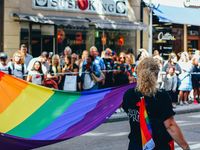
The raids set off immediate protests. Arquives gives about 3,000 people marching on 6 February to Toronto Police 52 Division and then on to Queen's Park, the seat of Ontario's legislature. Global News reports about 1,000 people at the legislature that day. Crowd counts are always rough, and these two differ by a factor of three. What is clear is that the community did not stay quiet.
The anger had a history. The University of Toronto's library exhibit describes a documented record of police homophobia and brutality in the city, including threats, harassment and beatings. A report by David White and Pat Sheppard on the raids, with anonymous testimony about officer conduct, went to Toronto City Council for its meeting of 26 February 1981.
What happened to the charges
Arquives summarises the outcome. Across Operation Soap and two smaller raids later that year, 304 people were charged as found-ins. One received a criminal record, and 36 received absolute or conditional discharges. In Toronto, 94 percent of those who pleaded not guilty were acquitted. Ontario's Attorney General at the time, Roy McMurtry, declined to hold anyone accountable for the violence.
The link to Pride
Researcher Gary Kinsman argued in 2016 that the raids and the protests helped form the modern Pride movement in Toronto. Pride Toronto called the raids an "act of violence" and said police verbally and physically abused patrons and staff. Secondary sources describe the protests as the start of what became Toronto's Pride Week. Treat that as a widely held view rather than a single founding date.
The apology
In June 2016, thirty-five years after the raids, Toronto Police Chief Mark Saunders apologised at a Pride reception at police headquarters. The article that reported it did not quote the apology itself, and the researcher Kinsman said it was unclear whether it would go beyond words. If you want the text, look for the police statement itself.
Why this still matters
Police actions against queer spaces appear again and again in Pride history. In Toronto the legal tool was the bawdy-house law, and the response was a march. People who had avoided the public eye walked into it together.
If you plan to visit Toronto for Pride, check the current dates on the official Pride Toronto site before you book, because dates and routes change from year to year.
Figures are from the sources named and could not be checked against court records.
Frequently asked questions
Sources
- arquives.ca · operation-soap
- globalnews.ca · toronto-police-to-issue-historic-apology-for-controversial-1...
- exhibits.library.utoronto.ca · bathhouse-raids
- thecanadianencyclopedia.ca · toronto-feature-bathhouse-raids