
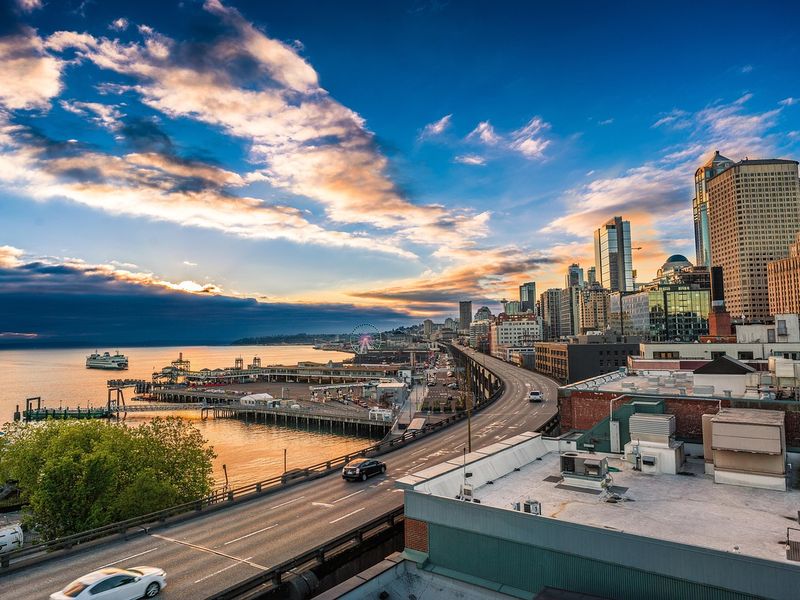
Hotels around Seattle
Tap the map for prices and availability.
About Seattle
Seattle's Pride history starts in the mid-seventies with a first Gay Pride Week put together by the city's lesbian and gay community. It was a small, political program: an open house, a discussion of transsexuality at the University of Washington, and a memorial service for the victims of the UpStairs Lounge arson in New Orleans. About 200 people came to a picnic in Occidental Park in the Pioneer Square neighborhood, moved on to Volunteer Park in the afternoon, and returned to Occidental Park for a street dance that evening. The week closed with an unplanned "Gay-In" at the International Fountain at Seattle Center. Lavender Country, often called the first openly gay country band, played that week too.
A few years later Mayor Wes Uhlman declared the city's first official Pride Week. Opposition grew at the same time, as an initiative tried to repeal local protections for gay and lesbian residents. During that year's Pride Week more than 3,000 people marched from Occidental Square along First Avenue to Westlake Park, and voters went on to reject the initiative.
The parade later alternated between downtown and Capitol Hill before settling on Broadway for many years. In the early nineties, bisexual and transgender people were added to the name of Pride Week. Once the festival had outgrown Volunteer Park, the parade moved back downtown, where it had started.
Today the nonprofit Seattle Pride, formerly Seattle Out and Proud, runs the parade on the last Sunday in June. More than 200 groups march down 4th Avenue in front of over 300,000 spectators, and PrideFest at Seattle Center follows right after. Early in June, the free, family-friendly Pride in the Park festival opens the month in Volunteer Park. Through the rest of the year the organization runs a speaker series, a voter engagement campaign and grants for community groups.
Seattle Pride – frequently asked questions
From the magazine
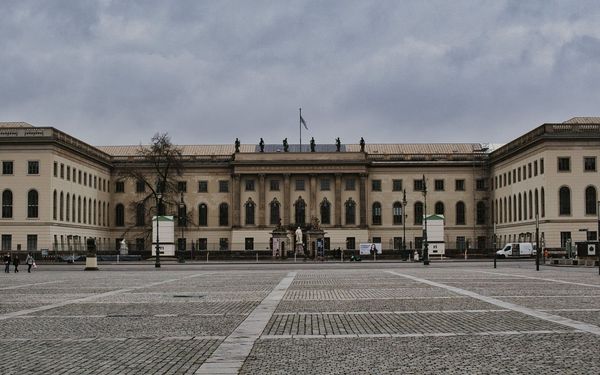
Magnus Hirschfeld and His Institute: What Was Lost on 6 May 1933
Long before Stonewall, Berlin had a place where homosexual people found advice and recognition. How the Institute for Sexual Science began and why it was destroyed in 1933.
Harvey Milk and Proposition 6: The November 1978 Victory
In 1978 a California ballot measure would have forced queer teachers out of public schools. Harvey Milk fought it, and voters rejected it. What happened and what it has to do with Pride.
Brenda Howard and the Pride Week: Who Turned a Memorial March into a Tradition
After Stonewall, a march marked the anniversary in 1970, and later a whole week. Brenda Howard is named as one of the people behind it. What is documented and where the title Mother of Pride stays disputed.