
2027 date
The date has not been confirmed yet. Expected August 2027
You will find the date here as soon as it is confirmed. Already know it? Let us know.
Derry Pride 2026
Derry Pride programme
Hotels around Derry
Tap the map for prices and availability.
About Derry Pride
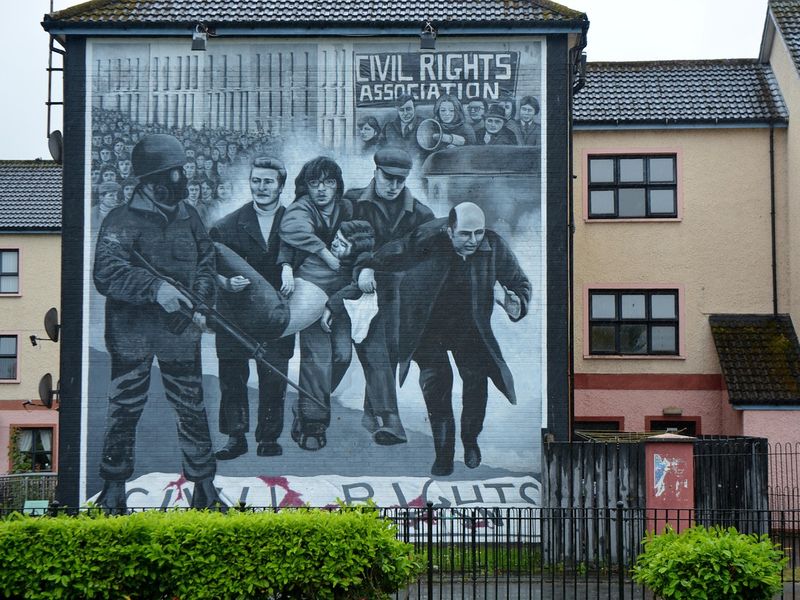
Derry, also known as Londonderry, is Northern Ireland's second-largest city, set on the banks of the River Foyle. Its historic walls still ring the old town, and the legacy of the Troubles remains visible, not least at the Museum of Free Derry, which documents the civil rights struggle of the late 1960s and early 1970s.
Foyle Pride was founded by a small group of activists and has stayed deliberately non-commercial: no corporate sponsors, just a multi-day programme of workshops, readings, art and music that builds up to a large parade through the city centre. The parade gathers at a central transport hub and crosses the Craigavon Bridge before reaching Guildhall Square, where live music and further events take place.
The route is not a coincidence. It follows the path of a historic civil rights march widely seen as one of the sparks of the Troubles. By retracing that route, Foyle Pride ties the fight for LGBTQ+ equality directly to the city's earlier civil rights history.
The festival runs on volunteer organising and works closely with the Rainbow Project, a local LGBTQ+ community centre. Over the years, Foyle Pride has grown into one of the island's largest non-commercial Prides, drawing thousands of people from Derry and the surrounding area.
About Derry
Pride in Derry is called Foyle Pride, after the river that runs through the middle of the city. It is one of the longest-running Prides on the island of Ireland. A small group of community activists started it in the early nineties, and it is still run by volunteers as a non-profit, grassroots festival with no commercial organiser behind it.
Foyle Pride takes place every August, usually over a week or so towards the end of the month. Events are spread across the city: cabaret and disco nights in local bars, theatre at the Playhouse, drag story hour for children at the central library, film screenings followed by discussion, comedy, panel talks on queer history and politics, an art market for queer creatives and a family fun day. The festival has opened with a trans Pride flag raised at the Free Derry Wall, the famous gable end in the Bogside. On the final Sunday there is a picnic held in memory of the activist Mark Ashton.
The parade on the closing Saturday is the main event. It sets off in the afternoon from the transport hub in the Waterside, the old railway station on Duke Street, crosses Craigavon Bridge and continues along Carlisle Road, Ferryquay Street and Shipquay Street to Guildhall Square. This is the same route the civil rights march took in the late sixties, and the link is deliberate. The parade itself came much later than the festival. When it first went ahead, the mayor and a number of local politicians walked with the city's LGBTQ+ community, while a handful of protesters held a small counter-demonstration.
If you plan to visit, check the festival website for the current programme, the theme of the year and exact dates. Many events are free, while some need a ticket.
Derry Pride – frequently asked questions
From the North West Transport Hub (Waterside) via Duke Street and the Craigavon Bridge, continue via Carlisle Road, Ferryquay Street and Shipquay Street to Guildhall Square.
Meeting point is right at the North West Transport Hub, Derry~Londonderry's central bus and train station. In cooperation with Translink, an electric mobility bus is available for people with reduced mobility, and there is also interpretation in British language of the language (BSL).
Nearby Prides

Belfast Pride 2026
Dublin Pride 2026
Glasgow Pride 2026 / Mardi Gla - Glasgow's Pride 2026
From the magazine
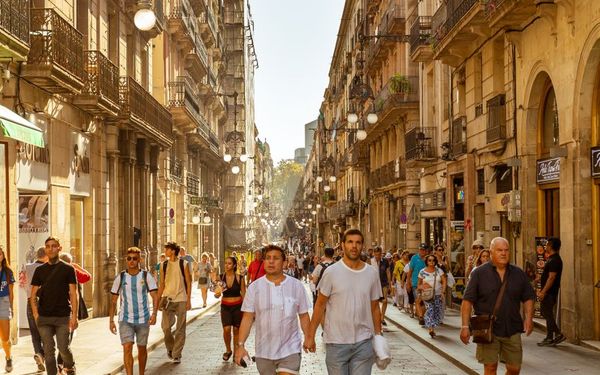
Barcelona 1977: Spain's First Pride March on La Rambla
On 26 June 1977, several thousand people marched without permission up La Rambla in Barcelona and demanded the end of a law that criminalised homosexuality. What happened and what came of it.
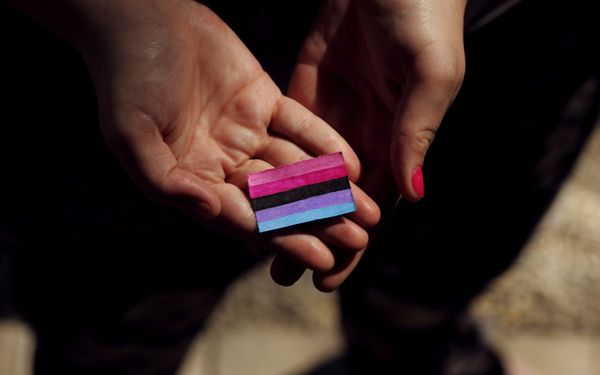
Bi Visibility Day and the Bi Flag: Where They Come From and What They Mean
23 September is Bi Visibility Day. Who started it, what the pink, purple and blue flag stands for, and how you can make bisexual people visible at Pride and in everyday life.
Transgender Day of Remembrance: Where It Comes From and How to Take Part
Every year around 20 November, vigils remember trans people who were killed. The origin of the day, the latest Trans Murder Monitoring figures and practical ways to take part (as of October 2026).