For more than fifty years, queer Christians, Muslims, and members of other faiths have built their own organizations and marched in their own blocs at Pride. A look at the history, from the first LGBTQ+-affirming church to a stall at Berlin Pride today.
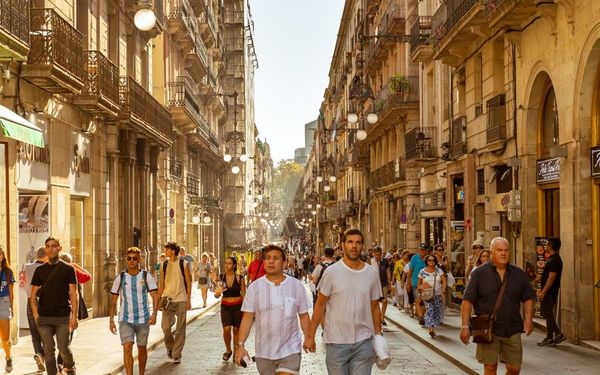
Rainbow flags, floats, music: that is what most people picture when they think of Pride. Easy to miss is a group that has been marching for decades too: queer Christians, Muslims, and members of other faiths who run their own stalls, hold their own services, and organize their own blocs in the parade. For many of them, "faith or queer" was never really the question. Finding a place to be both was.
Pushed out from two directions
Queer people of faith often face exclusion twice over. Their religious community may reject their sexuality or gender identity. Parts of the queer community, in turn, sometimes write off religion altogether as inherently hostile. Most of today's faith-based LGBTQ+ organizations grew directly out of that gap, not as a compromise between two sides, but as a space of their own.
How the first communities formed
It started in 1968, when Baptist minister Troy Perry founded the Metropolitan Community Church (MCC) in Los Angeles, the first denomination built specifically to welcome lesbian, gay, bisexual, and transgender worshippers. What began as a small home congregation grew into an international denomination with roughly 230 churches in more than 40 countries today.
A year later, in 1969, a discussion group for queer Catholics formed in Los Angeles. By 1973 it had become DignityUSA, still active today. The organization holds on to Catholic tradition even though the church's leadership rejects its position, a balance many members see as their own expression of faith rather than a contradiction of it.
Germany saw something similar in 1977, when the Ecumenical Working Group Homosexuals and the Church (HuK) formed at the German Protestant Church Assembly. It remains one of the oldest LGBTQ+ organizations in the country and still runs a stall every year at Berlin Pride, describing itself as both Christian and queer, not one in spite of the other.
Similar structures took shape outside Christianity too. In 1997, Pakistani American activist Faisal Alam founded the Al-Fatiha Foundation, one of the first international networks for queer Muslims. A year later that work led to Imaan in the United Kingdom, which describes itself as the world's oldest LGBTQ+ Muslim organization. Its name means "faith" in Arabic.
What interfaith blocs at Pride actually do
Many larger Pride events now have a standing interfaith presence: joint services or vigils the night before, dedicated blocs in the march, information stalls from different faith communities set up side by side. The idea behind it is simple but effective: visibility, pushing back against the common assumption that faith and being queer cannot coexist. Someone looking for a congregation that holds both together will usually get further at one of these stalls than through a general search online, where affirming and rejecting congregations often look identical from the outside.
None of this replaces criticism of religious institutions that hold discriminatory positions. Both things exist side by side: clear rejection of teachings that harm queer people, and the self-determined faith of those who refuse to be pushed out because of them.
Why this still matters
The argument over religion and queerness has not been settled, in any faith. But the histories of MCC, DignityUSA, HuK, Al-Fatiha, and Imaan tell a consistent story: for more than fifty years, queer people of faith have built their own institutions rather than choosing between two parts of who they are. At Pride, that becomes visible. At the stall, in the service, in a bloc that is unmistakably its own.
Frequently asked questions
Sources
- huk.org
- en.wikipedia.org · Ökumenische_Arbeitsgruppe_Homosexuelle_und_Kirche
- hrc.org · stances-of-faiths-on-lgbt-issues-metropolitan-community-chur...
- en.wikipedia.org · Al-Fatiha_Foundation
- lgbthistoryuk.org · Imaan
- americanprogress.org · 5-ways-people-faith-led-lgbtq-advocacy-efforts-since-1969-st...
Last reviewed: 18. August 2026