On June 30, 1979, about 450 people marched in Berlin for the first time on the anniversary of Stonewall. A look back at the start of Germany's Pride tradition, the fight against Paragraph 175 and the road to a mass demonstration.
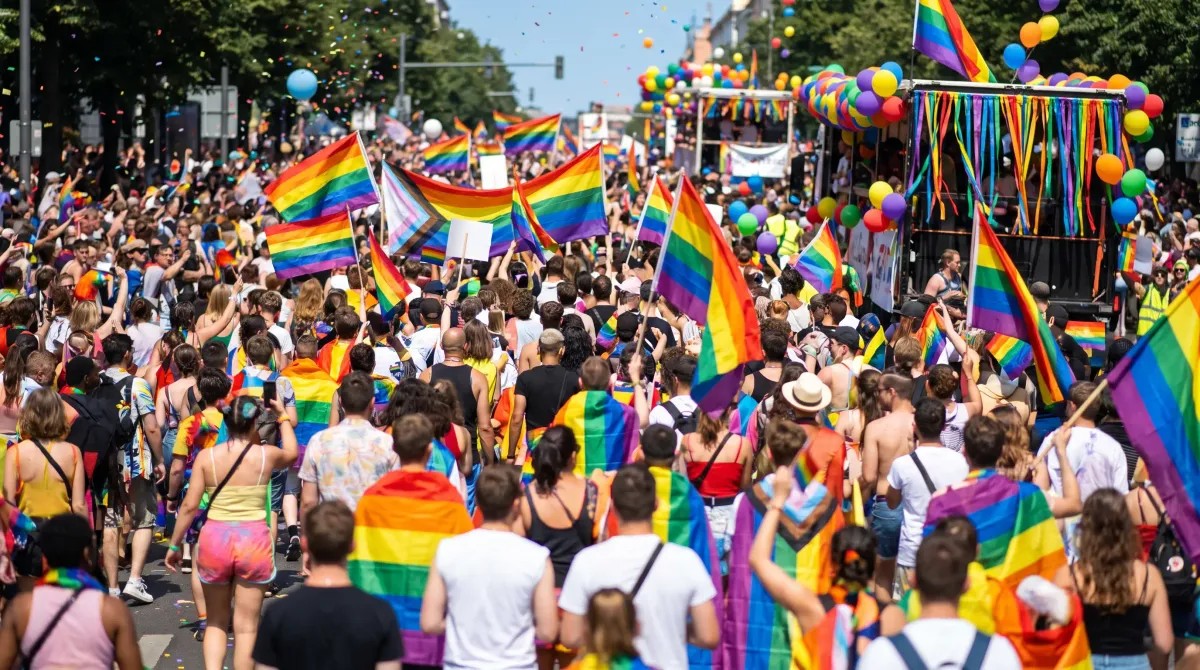
Pride today is a fixture of summer. Hundreds of thousands line the streets, parties spill out of the demonstrations. At the start stood something much smaller: a nervous group of people who were not sure anyone would show up.
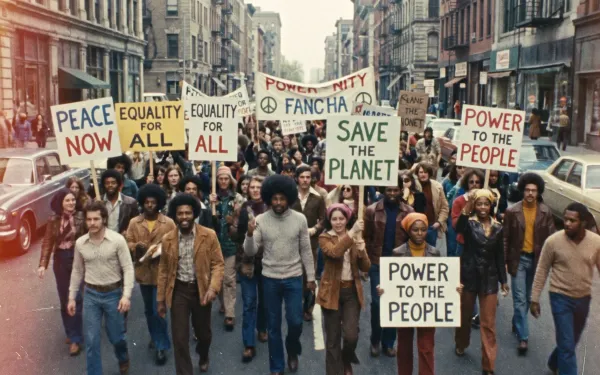
The trigger lies ten years back. In 1969, guests of the Stonewall Inn in New York's Christopher Street fight back against a police raid. Many of them are Black trans women, queer youth and young people without housing. The days of unrest turn into a symbol of resistance against discrimination. On the first anniversary of the uprising, the first parade marches through New York, the Christopher Street Liberation Day.
In 1979, social worker Andreas Pareik brings the idea from New York to West Berlin. He has seen how the city prepared the tenth anniversary of Stonewall. Together with Bernd Gaiser and others, he organizes the first Pride demonstration in Berlin, hosted at SchwuZ, the recently founded gay community center.
The call to action is titled "Create one, two, three, many Stonewalls". The slogans deliberately address the community itself: "Make your gayness public!" and "Lesbians, rise up, and the world will see you!". It is not about celebration but about visibility. Without visibility, the organizers argue, there can be no confrontation with the mainstream.
On June 30, 1979, the day arrives. Around 450 people gather at Savignyplatz, some wearing masks because they cannot be openly gay. The march moves along Kantstraße, Joachimsthaler Straße and Kurfürstendamm toward Halensee. People dance along the way, and a picnic at the end is planned, but a downpour puts a stop to it. Still: Berlin's first Pride has happened.
Looking back from today, it is easy to underestimate how unusual the march was. Only a few years earlier, bystanders on Kurfürstendamm had shouted at a gay demonstration that they had forgotten to gas these people. From the 1979 demonstrators, by contrast, no hostility is documented. Society had changed in those six years, not just the community.
The occasion remains serious. Paragraph 175 of the German criminal code still criminalizes sex between men in 1979, though in a milder form than before. The central demand of the march is to abolish the paragraph without replacement. It takes until 1994 for that to happen, while East Germany removes its equivalent law earlier.
That the demand takes so long has consequences that persist. More than 60,000 men are convicted in West Germany under the paragraph; many lose their jobs or their social standing. Rehabilitation comes late, and it does not reach everyone. The numbers matter when telling the story of Pride: the demonstration grew out of state-organized injustice.
The critical voices of 1979 are also documented. In their call, the organizers note that networks within the community are weak, and they explicitly hope that many lesbians will join, even if their worlds rarely overlap. It is a sign that the early Pride was primarily a gay men's event, long before it became the queer demonstration it is today.
The problem did not go away on its own. Why lesbians remain less visible than gay men at Pride resurfaces in the 1980s and is still debated. The organizational structures open up only gradually. Today, trans, intersex, non-binary and bisexual people are a matter of course at Pride, even if the discussion about visibility is not over.
For comparison: on the same weekend, Bremen holds its first Pride, calling it "Gay Carnival". It shows how quickly the idea caught on in Germany. From a few hundred participants, numbers grow slowly through the 1980s, while the AIDS crisis makes protest more urgent. After the fall of the Berlin Wall, the numbers explode: 15,000 in 1990, 25,000 in 1992. Today Berlin's Pride is among the largest events in the city.
The development is not free of conflict. Criticism of commercialization leads in 1998 to the founding of the Transgenialer, an alternative demonstration in Kreuzberg that runs until 2016. Even inside the official Pride organization, the debate continues over how political and how commercial the parade should be. These fights belong to the history of the event.
The story of the first Berlin Pride shows why it remains a demonstration rather than a pure street festival. It remembers a revolt, a ban that lasted for decades, and people who made themselves visible despite the risks. When you join the next Pride march, you stand in a tradition that began in 1979 with about 450 brave people.
Frequently asked questions
Sources
- schwulesmuseum.de · objekt-des-monats-poster-und-anschreiben-zum-1-christopher-s...
- tagesspiegel.de · lesben-schwule-kommt-raus-die-welt-sieht-euch-3973804
- berliner-zeitung.de · christopher-street-day-initiator-bernd-gaiser-im-interview-d...
- en.wikipedia.org · Berlin_Christopher_Street_Day
- tagesspiegel.de · der-lange-marsch-in-die-mitte-1019101
Last reviewed: 4. September 2026