One year after Stonewall, on June 28, 1970, a few thousand people walked up Sixth Avenue in New York behind a banner reading CHRISTOPHER STREET GAY LIBERATION DAY 1970. Here is how that first march became Pride.
On June 28, 1970, exactly one year after the police raid on the Stonewall Inn, a few thousand people walked up Sixth Avenue in New York. The banner at the front read “CHRISTOPHER STREET GAY LIBERATION DAY 1970”. There were no floats, no music, no festival staging. Police officers turned their backs on the marchers to show contempt. And yet by the end of that Sunday afternoon, something had been set in motion that returns every June in almost every large city in the world.
The years before
The idea did not come out of nowhere. Since 1965, a small group around activist Frank Kameny and librarian Barbara Gittings had picketed outside Independence Hall in Philadelphia every Fourth of July, the so-called Annual Reminders. The date was symbolic: on the country's feast of liberty, the point was to show who was excluded from it. The rules were strict. Men wore jackets and ties, women wore dresses, and nobody held a partner's hand. It was a protest that asked for acceptance by being as unobtrusive as possible.
After Stonewall in 1969, that restraint felt outdated to many. In November 1969, the Eastern Regional Conference of Homophile Organizations met in Philadelphia. Craig Rodwell, who had opened the Oscar Wilde Memorial Bookshop on Christopher Street two years before Stonewall, submitted a resolution with his partner Fred Sargeant and the activists Ellen Broidy and Linda Rhodes. Instead of the annual vigil in Philadelphia, there should be a march in New York every June, with no dress code and no age limit. New York Mattachine was the only group to vote against it. Everyone else agreed.
Planning in a bookshop
The organizing committee met in Rodwell's store, the first gay bookshop in the United States. Its mailing list became the most important tool for reaching people no organization represented. Who would lead the march was debated until shortly before the start; in the end, every group sent one representative to the front. The chant was argued over just as long, until “Say it clear, say it loud. Gay is good, gay is proud” won. The word “pride” goes back to committee member L. Craig Schoonmaker. “Gay Power” struck many as too grand; pride, by contrast, was something anyone could bring on their own.
Brenda Howard, a bisexual activist from the anti-war movement, organized not only the march but a whole week of dances, services and meetings. For that work she later became known as the “Mother of Pride”.
June 28, 1970
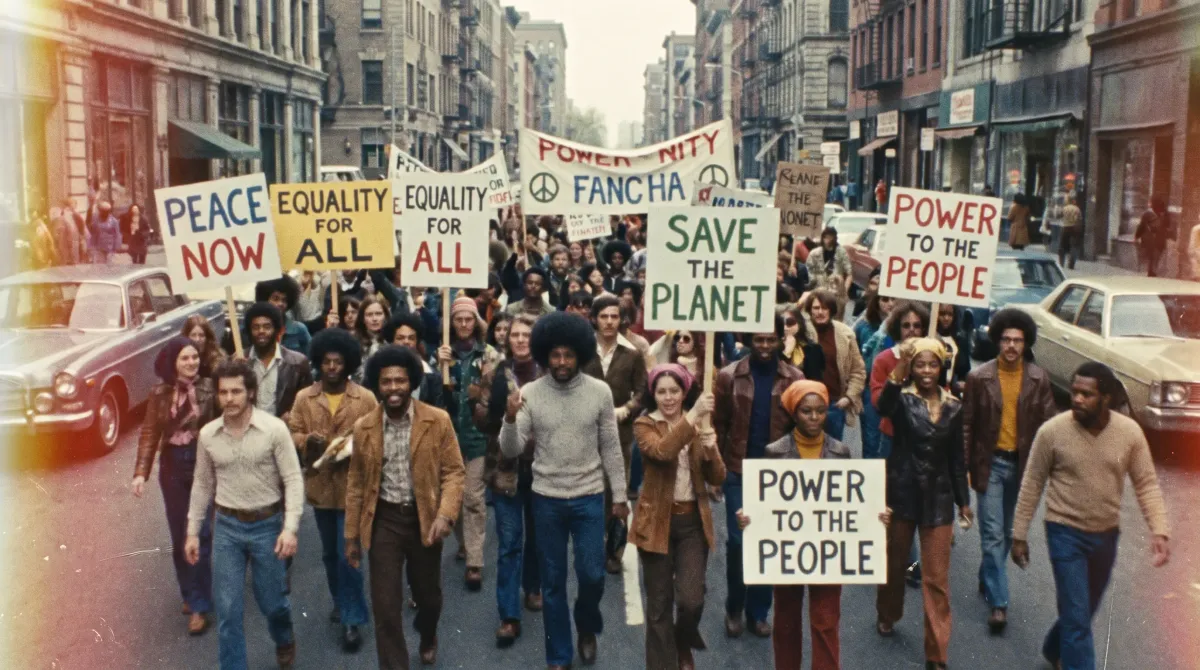
The march was meant to step off at 2 p.m. from Waverly Place, west of Sixth Avenue. At 2:10 the police pushed the crowd to move because it was barely advancing. At first people almost jogged, out of nerves; some later called it the “first run”. At the front walked representatives of groups including the Gay Liberation Front, the Gay Activists Alliance, Mattachine-New York and several chapters of the Daughters of Bilitis. As the line moved north up Sixth Avenue, it grew longer and bolder. The route covered about 50 blocks to the Sheep Meadow in Central Park, where a “Gay-In” with speeches and socializing followed.
Nobody knows exactly how many came. One police officer estimated at least 1,000; organizers spoke of 3,000 to 20,000. The New York Times reported the next day under the headline “Thousands of Homosexuals Hold A Protest Rally in Central Park”. That same weekend, people also marched in Chicago, Los Angeles and San Francisco, with Chicago going a day earlier. That simultaneity turned a local commemoration into a national movement.
Why it became “Pride”
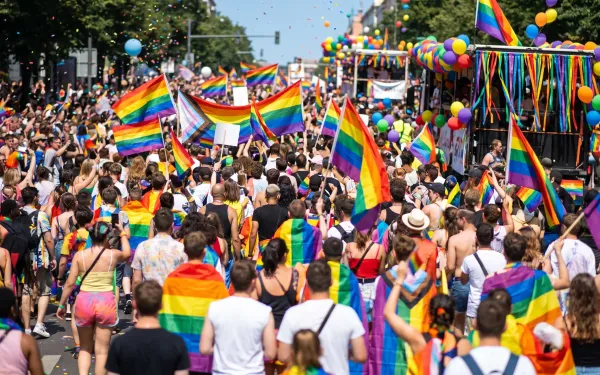
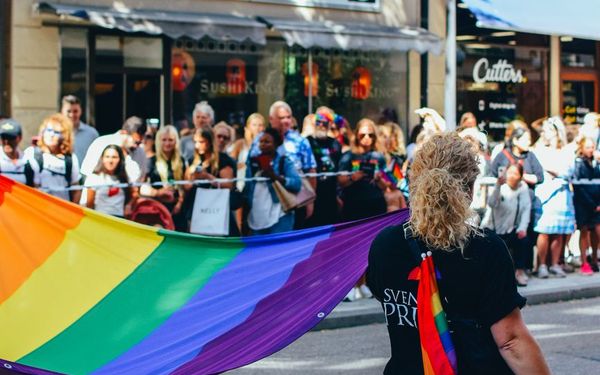
The march became a tradition. More people joined in 1971, the event kept growing, and so did the word that now stands everywhere. In Germany, Austria and Switzerland it is still called Christopher Street Day, after the street in Greenwich Village where the Stonewall Inn stands. The name is a reminder that the occasion was an uprising, not a parade.
Some of the demands from 1970 have been met, others not. The New York marchers called for repealing laws against homosexuality and for an end to police harassment. In many countries that has become ordinary life; in others, simply taking to the street is still dangerous. The first Pride march was a risk taken by a few thousand people. That it grew into a worldwide movement was not visible on that Sunday.
Frequently asked questions
Last reviewed: 14. September 2026