
Highlights of Hamburg PrideAs of 2026
Hamburg Pride 2027
Hamburg Pride programmeAs of 2026
The Senate is sending a signal of solidarity with the queer community.
Official opening in the CURIO-HAUS with the presentation of the Pride Awards.
Visibility demo from Gänsemarkt to Spielbudenplatz.
Central parade through the city centre, accompanied by the CSD street festival.
Motorcycle demo of the "on Bikes" from Magnus-Hirschfeld-Centrum.
Hotels around Hamburg
Tap the map for prices and availability.
About Hamburg Pride
Hamburg Pride ranks among Germany's largest Pride events and traces its roots to St. Georg, the district that's served as the city's queer center for decades. The event is run by a nonprofit that organizes both the march and the accompanying street festival.
The demonstration covers roughly 4.3 kilometers through downtown Hamburg, starting at Lübecker Straße and winding through Steindamm, Steinstraße and Mönckebergstraße before finishing at Lombardsbrücke bridge. What sets Hamburg apart from smaller German cities is sheer scale — in strong years, the route draws crowds in the hundreds of thousands, putting it alongside Cologne and Berlin as one of the country's three biggest Pride marches.
Around Jungfernstieg and Ballindamm, a multi-day street festival runs in parallel, with several stages alternating music, talks and performances. The festival typically pulls a bigger crowd than the march itself and has become its own fixture on Hamburg's summer calendar, drawing people who never join the demonstration at all.
The starting point is easiest to reach by U-Bahn or S-Bahn to the main train station, or directly to the Lübecker Straße stop — a short walk from there. Many visitors combine the march with a stroll through neighboring St. Georg, still the beating heart of queer Hamburg.
About Hamburg
Hamburg's Pride parade is a vibrant cornerstone of the city's LGBTQ+ scene, drawing massive crowds to celebrate diversity and equality. For safety reasons the parade no longer marches along Lange Reihe; it now follows a wider route through the city centre to accommodate its growing number of participants. Floats blasting music, dancers in dazzling costumes, and waves of supporters create an electric atmosphere of joy and solidarity. Surrounding festivities include live performances, street parties, and community booths addressing key issues like mental health, visibility, and rights.
The local LGBTQ+ history in Hamburg reflects the city's progressive spirit. St. Georg emerged as a queer hub decades ago, with bars and meeting spots fostering early activism. Drawing from global movements, Hamburg's community pushed for legal reforms, safer spaces, and cultural acceptance. Neighborhood institutions became rallying points for gatherings that built resilience against prejudice, evolving into today's inclusive network of support groups and events.
For English-speaking visitors, Hamburg Pride offers a uniquely welcoming vibe. It's more laid-back than flashier European events, blending German efficiency with heartfelt openness. Expect family-friendly zones alongside high-energy raves, with international DJs spinning tracks that unite crowds. The parade highlights intersectionality, spotlighting alliances with migrants, people of color, and allies, making it a model of modern activism.
Post-parade, the party continues in legendary venues around Reeperbahn and St. Pauli, where clubs host all-night bashes. Hamburg Pride isn't just a party; it's a powerful affirmation of love in all forms, inviting travelers to join a community that's as historic as the Elbe River itself. Whether marching or spectating, the experience leaves a lasting sense of belonging.
Hamburg Pride – frequently asked questions


Start on Lübecker Straße, via Steindamm, Kreuzweg, Adenauerallee, Steintorwall and Steinstraße, then Bergstraße and Mönckebergstraße back via Steintorwall/Glockengießerwall to the Lombardsbrücke; Street festival at Jungfernstieg/Ballindamm.
U-/S-Bahn to Hauptbahnhof or Lübecker Straße, then on foot.
Nearby Prides

Kiel Pride 2026
Bremen Pride 2026
Hanover Pride 2026
Brunswick Pride 2026
From the magazine

Bringing a sign to Pride: Make your point without shutting others out
A Pride sign can make a demand visible without blocking other people out. Practical choices about wording, size, photography and shared space make it work better.
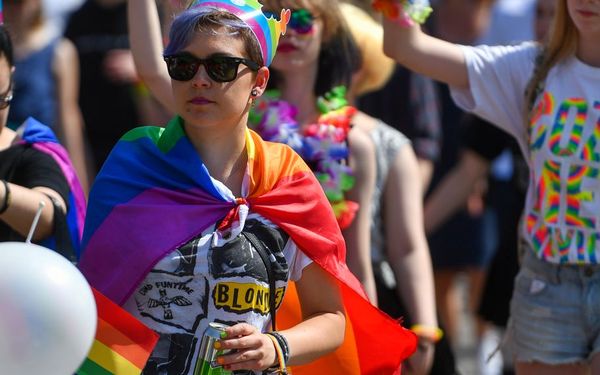
Queer and Seeking Refuge: Why Pride Is a Place of Arrival
For people who fled persecution because of who they are, Pride can be the first place where living openly feels safe. This guide covers the background, the support landscape and what organizers and fellow marchers can do to make the welcome real.

First Aid at Pride: How to Prepare Before You Go
Pride is a long, hot, crowded day. Most incidents stay minor — if organizers provide proper medical cover and attendees know when to ask for help. A practical guide to preparation, heat illness and dense crowds.