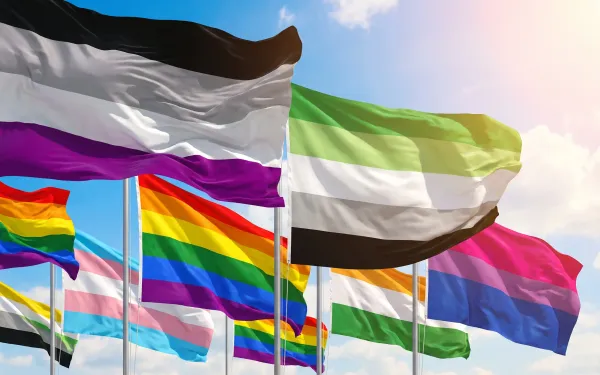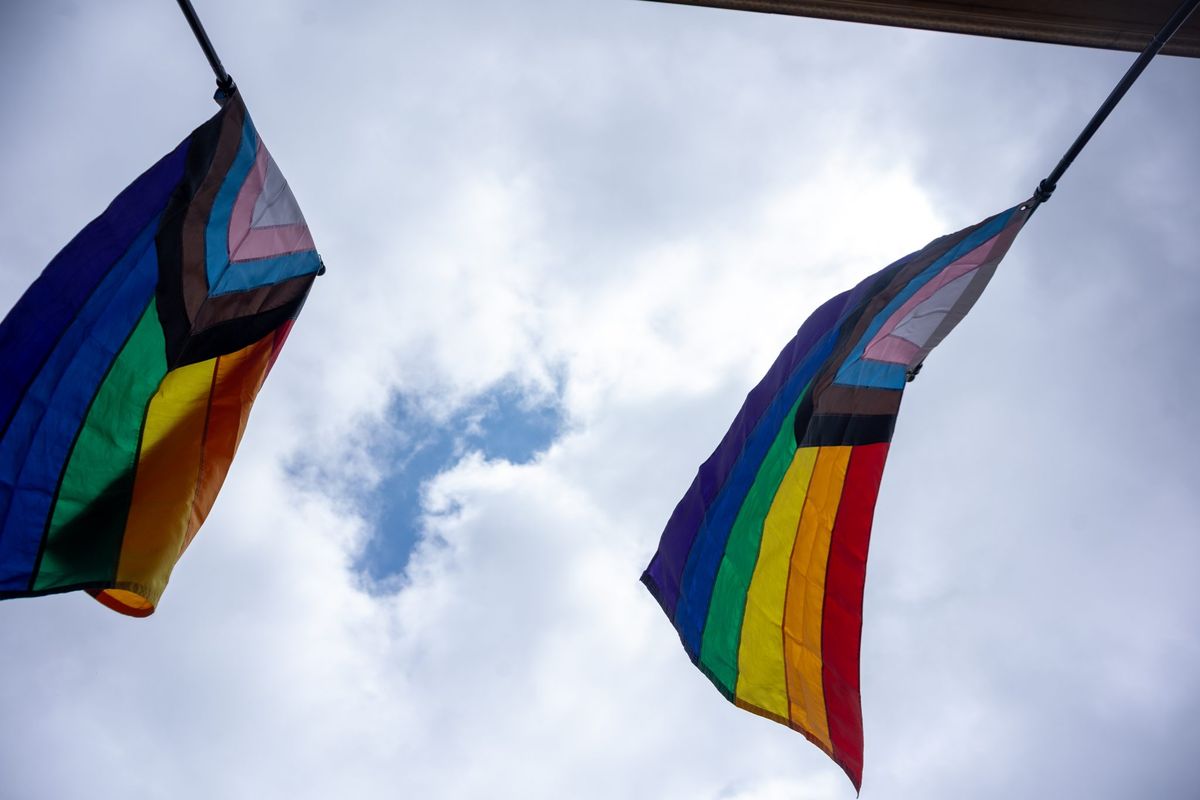
Every Pride parade today flies more than rainbow fabric. Here's the history behind the rainbow flag, the Progress flag, and the identity flags for trans, bi, non-binary, asexual and lesbian communities.
Walk through any Pride parade today and you'll spot more than rainbow fabric. Chevrons, circles, pastel stripes, sunset gradients: each flag carries its own history and represents a specific part of the community. Here's where the best-known ones come from.
The rainbow flag started in a San Francisco attic
Gilbert Baker made it happen. The artist and activist designed the flag in 1978 at the urging of Harvey Milk and other San Francisco organizers, working with roughly 30 volunteers, among them Lynn Segerblom and James McNamara. They hand-dyed the fabric in trash cans in the attic of San Francisco's Gay Community Center, using natural dyes, then stitched the strips together. The finished flag flew for the first time at the United Nations Plaza on June 25, 1978, during that year's parade.
The original had eight stripes, each with a meaning of its own: pink for sexuality, red for life, orange for healing, yellow for sunlight, green for nature, turquoise for art, indigo for serenity, purple for spirit. Pink and turquoise disappeared between 1978 and 1979 for practical reasons. Hot pink fabric was hard to source in bulk, and an even number of stripes made it easier to split the flag down the middle for display. What survived is the six-stripe version everyone recognizes now: red, orange, yellow, green, blue, purple.
Philadelphia added black and brown
In 2017, the city of Philadelphia went further. Under Amber Hikes, then director of the city's Office of LGBT Affairs, two more stripes were added above the classic six: black and brown, meant to make Black people and other people of color within the community visible in a way the original flag hadn't. The Philadelphia flag sparked debate that hasn't fully settled, and it set up the next redesign.
The Progress flag pulls several threads together
In 2018, Portland-based designer Daniel Quasar released a new version: the Progress flag. It keeps the six rainbow stripes as a background and adds a five-striped chevron along the hoist: black and brown from the Philadelphia flag, plus light blue, pink and white from Monica Helms' transgender flag. The arrow points right on purpose. Quasar wanted it to read as ongoing movement, not a finished statement, and placed the new stripes at the edge rather than blending them into the original six.
A further addition came in 2021: Valentino Vecchietti of Intersex Equality Rights UK added a yellow triangle with a purple circle, the symbol of the intersex flag. That version is known as the Intersex-Inclusive Progress flag, and it's the one you'll now see flown officially at many Pride events.
Flags for specific identities
Beyond the rainbow and Progress flags, individual communities within the LGBTQ+ umbrella have developed flags of their own over the decades:
- Transgender flag: designed by Monica Helms in August 1999. Light blue and pink echo the traditional colors assigned to baby boys and girls, white stands for people transitioning or outside the binary altogether.
- Bisexual flag: created by Michael Page, unveiled on December 5, 1998. Pink represents attraction to the same sex, blue attraction to a different sex, and the overlapping purple stands for both.
- Non-binary flag: made in February 2014 by Kye Rowan. Yellow represents people outside the gender binary, white people with multiple genders, purple a blend of male and female, black people without a gender.
- Asexual flag: created in 2010 by a member of the Asexual Visibility and Education Network (AVEN) known by the handle "standup." Black, gray, white and purple map the spectrum from asexual to sexual.
- Sunset lesbian flag: designed in 2018 by Australian non-binary activist Emily Gwen, seven stripes running from orange to pink. It replaced several earlier lesbian flags and is now the most widely used one.
What this means at your next Pride
If you don't recognize a flag, just ask. Most people are happy to explain theirs, since that's part of the point of carrying it. Many Pride organizers hand out or sell small flag guides at info booths, and some city governments, Philadelphia among them, publish their own explainers online. One misconception is worth clearing up: there's no central body that "approves" new flags on behalf of the whole community. New designs simply appear when a group doesn't see itself represented in the existing symbols, and they stick around when others start using them too.
Frequently asked questions
Last reviewed: 31. July 2026