
Highlights of Berlin PrideAs of 2026
Berlin Pride 2026As of 2026
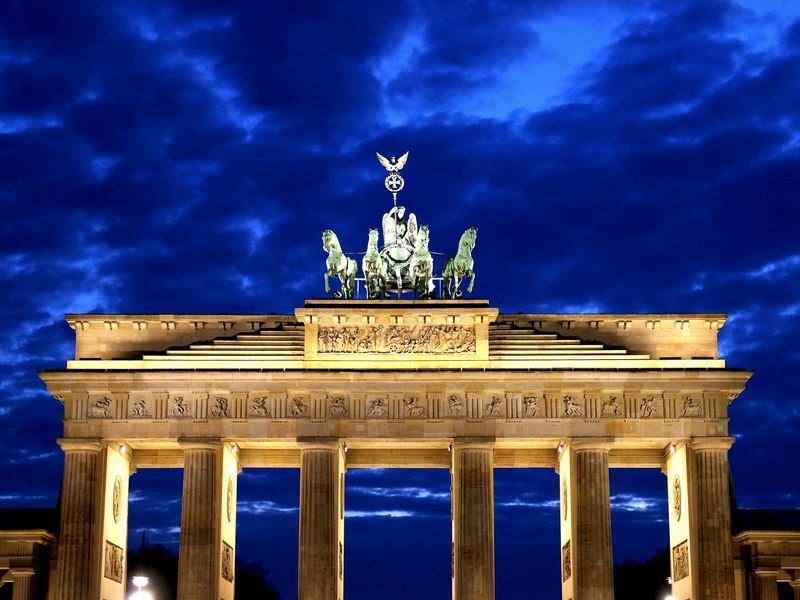
Under the motto "ATTITUDE IS HOT", the CSD Berlin 2026 is making the election year its theme: With a view to the Berlin parliamentary elections, the Berlin CSD e.V. is calling on people to take a stand and vote. In 2026, the CSD will last two days for the first time. On Friday, July 24, there will be a democracy evening at the Brandenburg Gate with three stages (approx. 6 p.m. to 11 p.m.); On Saturday, July 25, the 48th Pride demonstration starts at 12 noon in Leipziger Straße and ends with the final rally at the Brandenburg Gate.
Berlin Pride programmeAs of 2026
For the first time, a second CSD day: assembly with three stages, music and political contributions (approx. 6–11 p.m.).
Kick-off at the corner of Leipziger Straße / Charlottenstraße.
Departure of the first car in Leipziger Straße.
The first floats and foot groups reach the Brandenburg Gate.
Hotels around Berlin
Tap the map for prices and availability.
About Berlin Pride
Berlin Pride ranks among the largest pride events in Europe. The march was launched decades ago by activist Bernd Gaiser and still commemorates the Stonewall uprising in New York, when queer people first stood up openly against police violence. What began as a small protest with a few hundred participants has grown over time into one of the best-known pride parades in the world.
A registered nonprofit association has organized the event since taking over from an earlier alliance of Sonntags-Club, LSVD Berlin-Brandenburg and Mann-o-Meter, who had previously run Berlin's pride celebrations together. The yearly theme and the movement's political demands are not decided behind closed doors: open forums let anyone interested help set the priorities for the coming parade.
The parade itself traditionally takes place in high summer, embedded in a weeks-long pride festival period with concerts, political events and street festivals across several districts. Related formats such as Kreuzberg Pride, which deliberately skips commercial floats to emphasize the movement's political roots, round out the programme around the main parade.
Berlin Pride explicitly sees itself as more than a celebration — it is a demonstration for equal rights and against discrimination. The organizing association now runs its own office in Berlin, serving as a meeting point for queer initiatives and groups and supporting preparations for the parade throughout the year.
For Berlin's queer community, Pride is a fixed date on the calendar — a day when visibility and political demands come together, carried by people from across the city and well beyond it.
About Berlin
Berlin's Pride celebration stands as one of Europe's most vibrant and politically engaged LGBTQ+ events. The annual Pride parade draws hundreds of thousands of participants and spectators, transforming the city into a colorful expression of diversity, freedom, and solidarity. With elaborate floats, live performances, and cultural programming, Berlin's Pride represents both a joyful celebration and a powerful statement for equality and human rights.
The roots of Pride activism in Berlin run deep. The city has a remarkable history as a center for LGBTQ+ self-organization and political mobilization. This legacy continues to shape contemporary Pride events, which blend festive celebration with serious political engagement and historical remembrance.
What distinguishes Berlin's Pride is its commitment to inclusivity and intersectionality. The events feature diverse voices from the LGBTQ+ community, including marginalized groups often overlooked in mainstream Pride celebrations. Alongside the main parade, the city hosts workshops, film screenings, art exhibitions, and panel discussions that explore queer history, contemporary challenges, and visions for the future.
Memorial and educational components are integral to Berlin's Pride. The city acknowledges its complex past, including periods of severe persecution, and uses Pride as an opportunity to honor those who suffered and to recommit to the ongoing struggle for justice. This combination of celebration, education, and activism makes Berlin's Pride a unique gathering that resonates far beyond the city's borders, attracting visitors from around the world who seek to participate in a Pride that honors history while building toward a more equitable future.
Berlin Pride – frequently asked questions



The demonstration starts at 12:00 p.m. at Leipziger Straße (near Charlottenstraße) and leads via Potsdamer Platz, Potsdamer Straße, Bülowstraße, Nollendorfplatz, Kleiststraße, An der Urania, Schillstraße, Lützowplatz, Klingelhöferstraße, Hofjägerallee and Großer Stern to the Victory Column; selected vehicles will continue on the Straße des 17. Juni for the final rally at the Brandenburg Gate.
U-/S-Bahn to Potsdamer Platz or U-Bahn Spittelmarkt, then a few minutes on foot.


Nearby Prides

Berlin Reinickendorf Pride 2026
Leipzig Pride 2026
Dresden Pride 2026
Brunswick Pride 2026
From the magazine

Bringing a sign to Pride: Make your point without shutting others out
A Pride sign can make a demand visible without blocking other people out. Practical choices about wording, size, photography and shared space make it work better.
Queer and Seeking Refuge: Why Pride Is a Place of Arrival
For people who fled persecution because of who they are, Pride can be the first place where living openly feels safe. This guide covers the background, the support landscape and what organizers and fellow marchers can do to make the welcome real.

First Aid at Pride: How to Prepare Before You Go
Pride is a long, hot, crowded day. Most incidents stay minor — if organizers provide proper medical cover and attendees know when to ask for help. A practical guide to preparation, heat illness and dense crowds.