
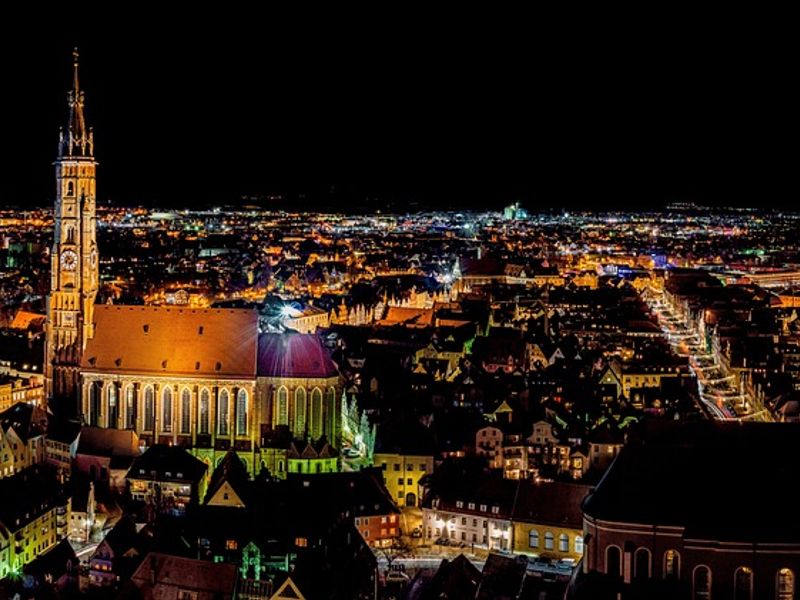
Hotels around Landshut
Tap the map for prices and availability.
About Landshut Pride
Landshut's Pride day fills the medieval old town of this Lower Bavarian city with a queer presence it doesn't usually have — a town better known for Trausnitz Castle towering over the Isar river and one of Germany's best-preserved Gothic town centers. The event is organized by a regional association working for queer visibility in a part of Bavaria that leans conservative.
What sets it apart is the involvement of both major local church districts, Protestant and Catholic, which regularly co-organize an ecumenical open-air service ahead of the demonstration. Pairing a church service with a political march is unusual among German Pride events, and it signals a deliberate choice in Landshut to hold faith and queer activism together rather than apart.
After the march, the crowd typically gathers for a street festival with speeches, food stalls and music that runs into the evening. Turnout has grown over the years into four-digit numbers — a notable size for a Lower Bavarian district town, and a sign that queer community organizing reaches well beyond Bavaria's bigger cities like Munich and Nuremberg.
Landshut sits on the Munich–Regensburg rail line and is easy to reach by train; the old town itself is compact enough to explore entirely on foot. Visitors who come for the march often stay to wander the Gothic streets long after the crowd has dispersed.
About Landshut
Landshut's Pride movement thrives as a vibrant celebration of diversity and unity in this charming Bavarian city. Pride parades draw thousands through the historic old town, with colorful flags fluttering and upbeat music filling the air. The march typically kicks off from areas like the Postplatz, winding through the Theaterstraße to the Ländtorplatz, culminating in rallies featuring speeches advocating for equality and acceptance. A unique highlight is the inclusion of spiritual elements: an open-air queer service, jointly organized by local evangelical and catholic deans with the Queer in Niederbayern association, emphasizes that faith and queerness are compatible. This ecumenical gathering honors hope, humanity, and love, welcoming all regardless of religious background.
The local LGBTQ+ community's history reflects resilience and growth. From humble beginnings, it has evolved into a robust network challenging discrimination and promoting visibility. The Queer in Niederbayern group leads Pride organization, fostering dialogue between queer individuals and the broader community. Despite occasional counter-protests, the emphasis remains on peaceful advocacy and joyful commemoration. For English-speaking visitors, Landshut offers an authentic glimpse into Germany's progressive queer scene, blending tradition with modern inclusivity in a welcoming atmosphere.
Pride events in Landshut go beyond protests, featuring music, food stalls, and performances that unite locals and tourists. They empower the community while inviting others to embrace the message: Never silent again – our rights endure. In a city famed for its Bavarian warmth, queer life shines brightly, positioning Landshut as a hidden gem in southern Germany's LGBTQ+ landscape.
Landshut Pride – frequently asked questions

Nearby Prides

Munich Pride 2026
Nuremberg Pride 2026
Stuttgart Pride 2026
Prague Pride 2026
From the magazine

Pride Anthems: How These Songs Became the Soundtrack of Pride
"I Will Survive," "I'm Coming Out," "Born This Way" turn up at nearly every Pride event. The stories behind how these songs became anthems say a lot about the community that adopted them.
STAR: How Marsha P. Johnson and Sylvia Rivera Built America's First Trans Mutual Aid Group
A year after Stonewall, homeless trans teenagers in New York had almost nowhere to turn. Marsha P. Johnson and Sylvia Rivera built a shelter for them themselves. This is the story of STAR, and of a fight for a place on the Pride stage that the movement's own organizers tried to deny them.
The Dyke March: The Story Behind the Parade That Never Asks Permission
Since 1993, Dyke Marches have run in cities worldwide without permits, sponsors, or floats. Here's how a march built by and for lesbians became one of Pride season's most enduring traditions.