Pride is a long, hot, crowded day. Most incidents stay minor — if organizers provide proper medical cover and attendees know when to ask for help. A practical guide to preparation, heat illness and dense crowds.
Pride is a celebration — and for many, a long, hot, crowded day. Most incidents stay minor: a dizzy spell, a scraped knee, not enough water. Keeping it that way takes two things: organizers who set up proper medical cover, and attendees who know when to ask for help.
What organizers prepare
Medical care at a large event is the organizer's responsibility. It belongs in the safety plan and is agreed with the local authority. How much is needed depends on crowd size, weather, the site and the programme — there is no universal number. The requirements come from local event regulations and from the permit itself.
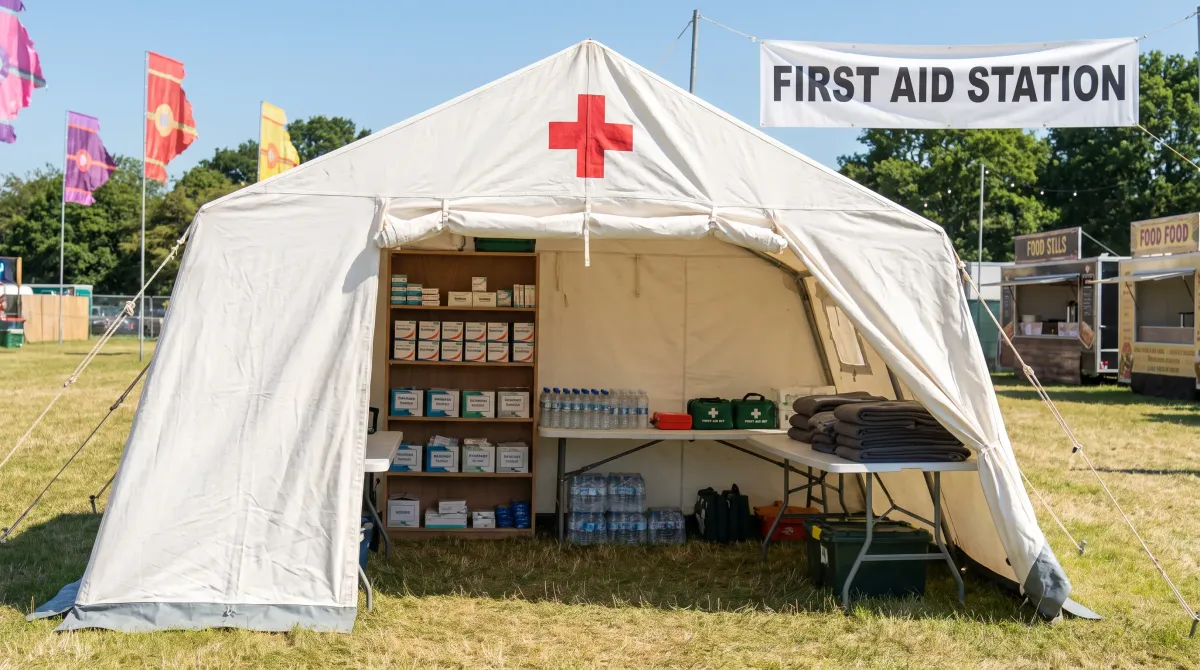
In practice, Pride teams contract a first aid service. In Germany that is usually the German Red Cross, the Workers' Samaritan Federation, St John Ambulance or the Maltese Aid Service; in the UK and Ireland, St John Ambulance and the Red Cross; in Spain, Cruz Roja and Protección Civil. These organizations provide trained first aiders, medical tents, equipment and supplies. Crucially, event first aid is not the ambulance service: it treats people on site and hands over to emergency services when needed.
What works well: fixed first aid posts at clearly visible points, a radio link between the control room and the stage, clear routes for ambulances, and free water points across the site. Many Prides also run awareness teams, who deal with harassment, panic and mental distress rather than medical emergencies.
What to bring as an attendee
Water, sun protection, a copy of any important prescriptions, comfortable shoes. If you take medication regularly, carry it with you and keep it in its original packaging. In the heat, a light hat helps, and a break in the shade is not a weakness.
Alcohol and other substances amplify the effect of heat. Combined with standing for hours, they are the most common cause of collapse. One simple habit: agree with a friend that you will look out for each other and pick a meeting point in case you get separated. And find out where the nearest first aid post is before you need it — it is usually listed in the programme or on the event website.
Recognising heat illness
With heat exhaustion, the body sweats heavily, the skin turns pale and clammy, and headache, dizziness, nausea or cramps follow. Move the person to a cool place, raise their legs, and give small sips of water. If they do not improve, get medical help.
Heatstroke is an emergency. The skin is hot and red, often dry, body temperature climbs above 40°C, and the person may become confused or unconscious. Every minute counts: call the emergency number, then cool them down immediately — loosen clothing, wet the skin, fan the air. Cold packs on the neck, armpits and groin speed up the drop in temperature.
When the crowd gets tight
In dense crowds, the key advice is to keep moving and not push against the flow. If you feel hemmed in, put your arms in front of your chest to protect your breathing space and work sideways toward the edge. If you fall, curl up small and protect your head. People nearby should make space at once and call for help.
Emergency numbers differ: 112 across Europe, 911 in the US and Canada, 999 in the UK, 000 in Australia. All are free. If you cannot find a first aid post, ask stewards or the awareness team — they know the routes and can bring help.
In the end, one rule covers most of it: notice, speak up, get help. Pride is at its best when everyone gets through the day safely.
Frequently asked questions
Last reviewed: 15. September 2026