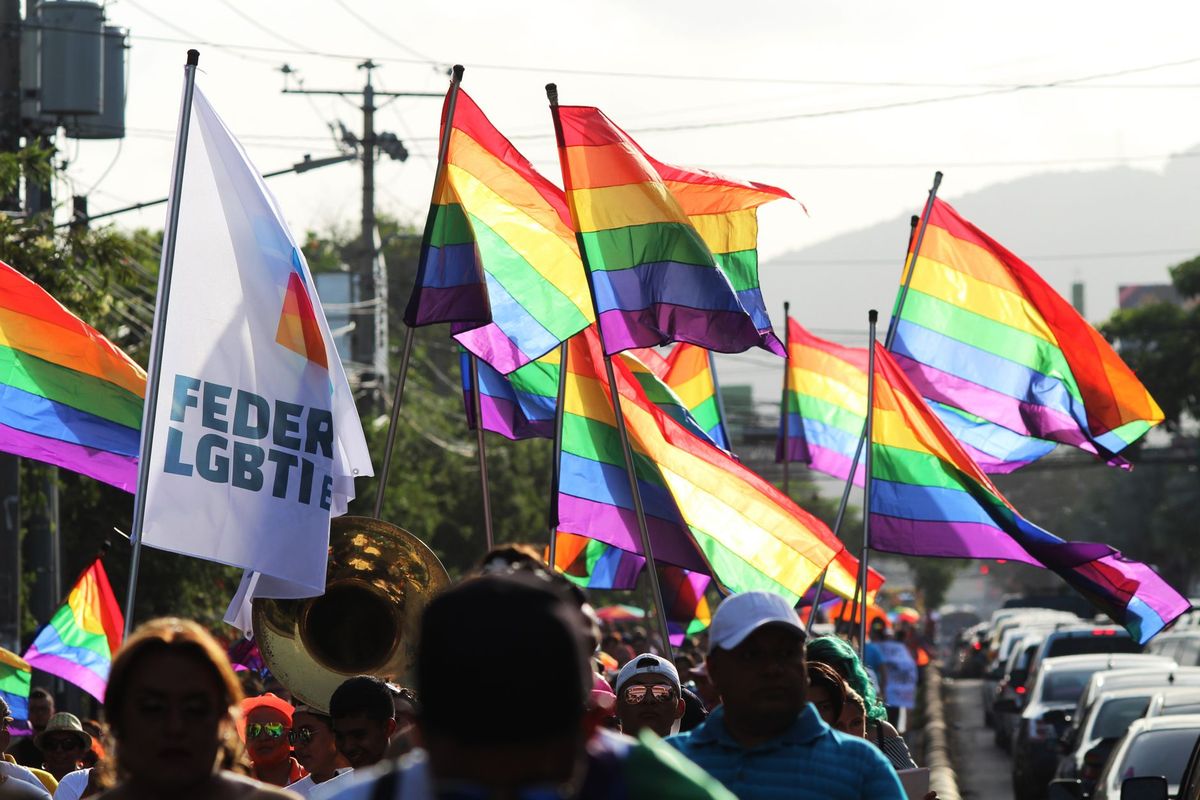
The rainbow flag hangs from balconies, town halls and every Pride march. Its story is short and well documented: a man with a sewing machine, a city supervisor with a request, and a summer day in San Francisco.
A request from Harvey Milk
Gilbert Baker arrived in San Francisco in 1972, in the early years of gay liberation. He was known there for his sewing, his drag costumes and the political banners people carried at demonstrations. In 1978 he was co-chair of the Decorations Committee preparing the Gay Freedom Day celebration. City Supervisor Harvey Milk and other local activists asked him to design a new symbol for the community, to be unveiled at the parade in June.
Baker wanted a sign that celebrated diversity, and he spoke of a "rainbow of humanity". The flag was meant to empower his "tribe", as he called the community. "This was our new revolution," he said later, "a tribal, individualistic and collective vision. It deserved a new symbol."
Why a flag?
Baker said he came to see flags in a new light. He had discovered their power, their transcendent, transformational quality and the emotional connection they hold.
Harvey Milk was assassinated in November 1978. Demand for the flag grew afterwards, and Baker worked tirelessly, in the words of the GLBT Historical Society, to make it a universally recognised emblem of the community.
Two flags, eight stripes
The first flags flew on 25 June 1978 at the Gay Freedom Day Parade in San Francisco, at United Nations Plaza. There were two huge ones, designed at 30 by 60 feet, dyed and stitched by hand. Volunteers and friends helped, among them Lynn Segerblom, James McNamara, Glenne McElhinney, Joe Duran and Paul Langlotz.
The flag had eight stripes, and Baker gave each a meaning. Hot pink stood for sexuality, red for life, orange for healing, yellow for sunlight, green for nature and purple for spirit. For turquoise and blue the sources disagree: some say art or magic, others harmony or serenity. That suggests the meanings were never fully fixed.
Why there are six stripes today
The flag changed in 1979. The hot pink stripe was dropped because fabric in that colour was not available. Baker then removed the turquoise stripe too. For the 1979 parade, flags were to hang from the streetlamps on Market Street, and he needed an even number of stripes so that each side of a lamp showed the same number. That gave us the version we know.
National Geographic gives a further reason: demand rose after Milk's assassination, which put pressure on manufacturers. The two explanations do not exclude each other. The GLBT Historical Society cites cost and display considerations.
What is left of the originals
The two first flags were thought lost for more than forty years. In April 2021 a donor gave a segment of one of them to the GLBT Historical Society in San Francisco. It is the only known surviving piece of the two originals, with the pink stripe at the top. The museum has displayed it since June 2021.
What it means at your next Pride
You do not need the history to wave a flag. It helps, though, when someone tells you the flag has always looked like this. It has not: it began with eight stripes, and a fabric shortage and a row of lampposts turned them into six. The flag's design kept changing from the start. For today's variants, see our article on Pride flags on this site.
If you bring your own flag, the six-stripe version is the common one. Which you choose is up to you.
The dates at a glance
- 1972: Gilbert Baker arrives in San Francisco.
- 25 June 1978: The first two eight-stripe flags fly at Gay Freedom Day.
- November 1978: Harvey Milk is assassinated.
- 1979: Pink and turquoise are dropped and the six-stripe flag appears.
- April 2021: A fragment of an original flag goes to the GLBT Historical Society.
Status: November 2026. Based on the GLBT Historical Society and National Geographic. Sources differ on details such as the stripe meanings.
Frequently asked questions
Sources
- glbthistory.org · rainbow-flag
- nationalgeographic.com · history-of-the-lgbtqia-pride-flag
- artsandculture.google.com · qQWRglb3jtkOew