Ask where Pride began and most answers stop at Stonewall in June 1969. Four years earlier, though, people in suits and dresses were already standing in front of Independence Hall in Philadelphia, demanding equal rights, on the same day every year. They called it the Annual Reminder. This is how it started, what it looked like and why it ended in 1969.
The start: 4 July 1965
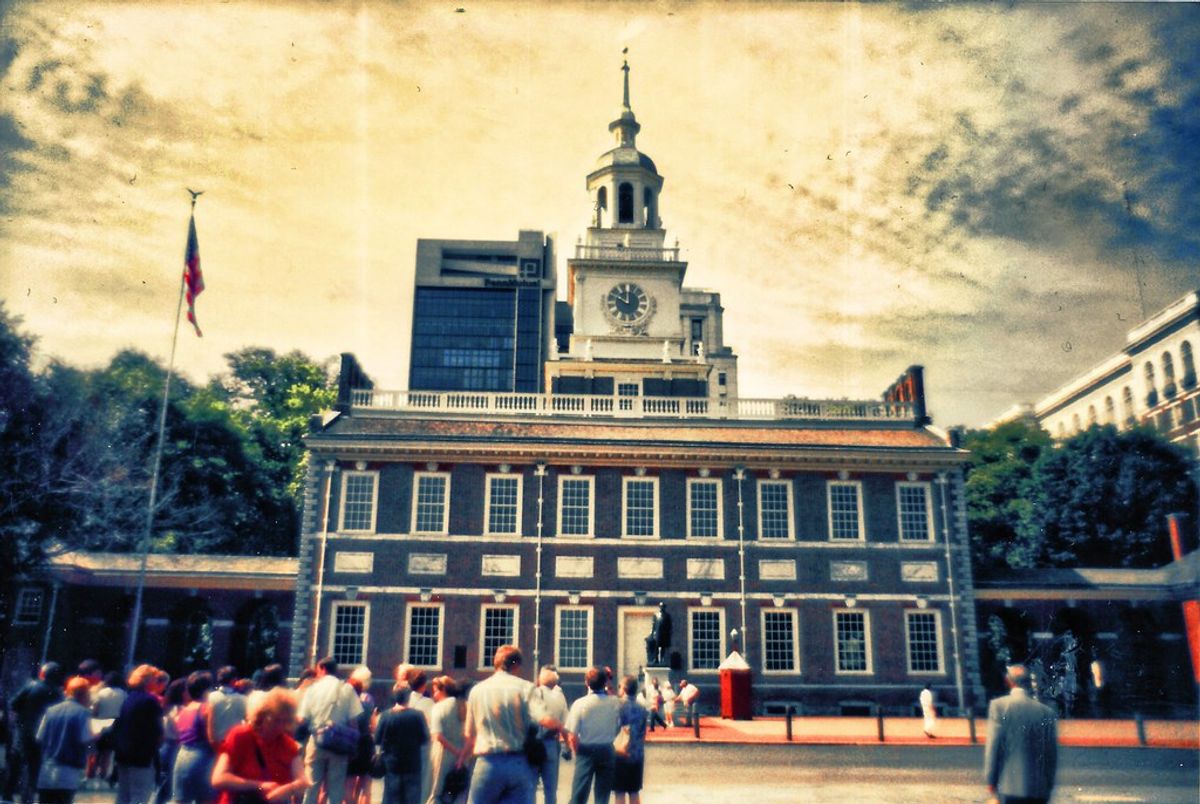
On 4 July 1965, 39 people gathered outside Independence Hall in Philadelphia, the building where the Declaration of Independence was signed in 1776. They picketed for the rights of homosexual people. According to the Philadelphia Encyclopedia, it was one of the earliest organised demonstrations of its kind in the United States, and the largest known up to then. The aim was to remind the public that basic rights of citizenship were being denied to gay people. Hence the name.
The East Coast Homophile Organization, or ECHO, organised it, a federation of groups along the East Coast. It followed a similar picket at the White House in April 1965. The leader of that action, Frank Kameny, and the Philadelphia activist Barbara Gittings put the Philadelphia demonstration together in just three months. With Independence Hall and the Liberty Bell behind them, the picketers held placards for more than two hours, demanding equal treatment under the law.
The dress code
The image of these pickets is striking even now: men in suits, women in dresses, in a line. Frank Kameny insisted on it. Participants were to wear business-appropriate clothes to show that gay people were ordinary and employable. For Kameny it was personal. From 1958 to 1961 he fought a long legal battle with the federal government over his dismissal from public service because of his sexual orientation.
The strategy was never uncontested. The Philadelphia Encyclopedia notes that the emphasis on conformity led some to ask whether the Reminders represented all gay people, especially transgender people. How conventional or how visible political protest should be remained a point of dispute in the movement.
Five years, always on 4 July
The Reminders took place every 4 July from 1965 to 1969. They were the first such demonstrations to be repeated in consecutive years. The pickets stayed peaceful. In May 1965, gender-variant teenagers had already staged a sit-in at Dewey's Lunch Counter in Philadelphia, a more direct step than the picket line. Civil rights protest as a whole grew bolder and more confrontational in these years, and the movement for gay rights followed.
On 28 June 1969 the Stonewall uprising began in New York. A week later, on 4 July, the last Reminder took place, with 45 participants. The organisers concluded that the course of the movement had changed with Stonewall. The Reminders were put aside in favour of events that grew into the Pride parades that continue today. The first Philadelphia Gay Pride Parade took place in 1972.
What remains
The Annual Reminders show that the road to Pride was longer than one night in June 1969. Stonewall was a turning point, but it did not stand alone. People had been holding signs in front of a national monument for years.
In 2005 the Pennsylvania Historical and Museum Commission placed a marker at Sixth and Chestnut Streets, near Independence Hall, to commemorate the Annual Reminders. In 2015 a weekend of events with a reenactment marked fifty years since the first picket.
If you visit
If you travel to Philadelphia, the walk to Independence Hall and the marker is worth it. Tours and exhibitions change, so check on site. For background on Kameny and Gittings, archives such as the one at the University of Southern California, which holds a collection of picket signs belonging to the two, are a good place to start.
Sources and date
The details come from the essay "Reminder Days" by Alaina Noland in the Philadelphia Encyclopedia, with the University of Southern California archive finding aid for the Gittings and Kameny picket sign collection as a supplement. As of 27 November 2026. Some sources give 1966 to 1969 for the series; we follow the Philadelphia Encyclopedia, which gives 1965 to 1969.