
Luebeck Pride 2027
Luebeck Pride programme
Hotels around Lübeck
Tap the map for prices and availability.
About Luebeck Pride
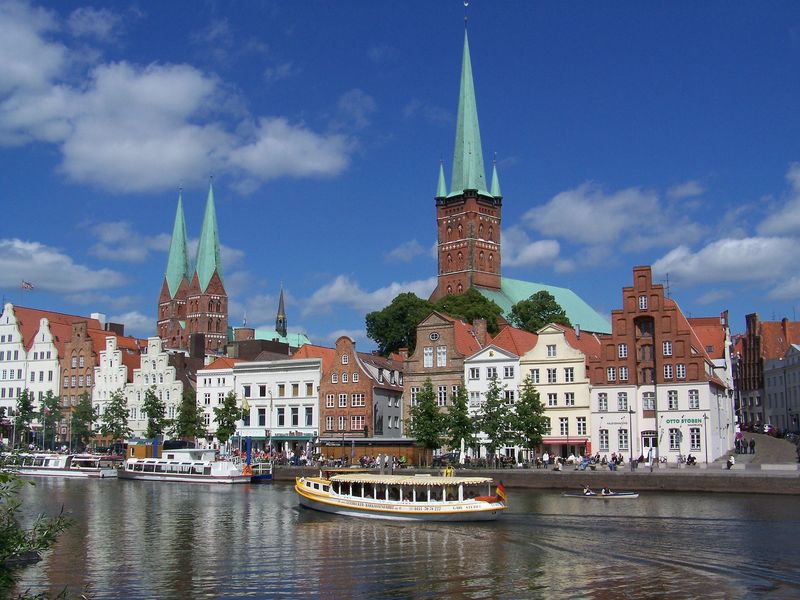
Lübeck's Pride march winds through the old Hanseatic town, past red-brick gables, the Holstentor gate and the seven church spires that define the skyline. The demonstration starts and ends at the Markt square in front of the town hall, tracing a route through Kohlmarkt, Königstraße and Holstentorplatz before returning along the Trave river to the center.
The event is organized by a nonprofit association dedicated to queer visibility in the city, which has run the march for many years. Around the parade, a street festival takes over the Markt: a stage, food stalls, DJ sets and local drag performers keep the square busy from morning into the evening. The program often includes an ecumenical service in one of the old town's churches and an afterparty in a nearby club.
For Lübeck, Pride ranks among the largest annual gatherings in the city calendar, with turnout growing noticeably in recent years and attendance regularly reaching well into five figures on a good-weather day. The setting is unusual for an event this size: instead of a big-city backdrop, the parade moves through a UNESCO World Heritage old town, its narrow lanes and historic merchant houses keeping everything within easy walking distance.
The starting point is easy to reach — Markt square sits a short walk from the main train station, right in the historic center. Organizers typically also arrange accessible transport for people who cannot walk the route; registration runs through the association's website.
About Luebeck
Lübeck's LGBTQ+ community is vibrant and well-organized, with Pride celebrations serving as both a joyful affirmation of identity and a moment of historical reflection. The Pride movement in this Hanseatic city carries particular significance due to its deep connection to remembrance and the fight against discrimination.
A defining feature of Pride in Lübeck is the Memorial for Homosexuals Persecuted in National Socialism, which stands as a powerful reminder of the persecution faced by LGBTQ+ individuals during the Nazi era. This monument reflects the community's commitment to honoring those who suffered while advocating for present-day equality and acceptance. The local LGBTQ+ organizations use Pride events to combine celebration with education, ensuring that history informs contemporary activism.
The Lübeck CSD association plays a central role in organizing Pride events and commemorative gatherings throughout the year. These occasions bring together members of the community, allies, and supporters to celebrate diversity and demand recognition of LGBTQ+ rights. The events highlight the resilience of the community and its determination to create a more inclusive society.
Pride in Lübeck represents more than festivity; it embodies a commitment to remembrance, education, and social progress. The community's engagement with its own history—both the painful chapters and the ongoing struggle for equality—makes Pride in this city a meaningful expression of solidarity and hope. Visitors and residents alike find in Lübeck's Pride celebrations a powerful demonstration of how communities can honor the past while building a more equitable future.
Luebeck Pride – frequently asked questions
Markt & Marienkirchhof – Schüsselbuden – Kohlmarkt – Sandstraße – Mühlenstraße – Königstraße – Wahmstraße – Kohlmarkt – Holstenstraße – Holstentorplatz – Lindenplatz – Holstentorplatz – An der Untertrave – Beckergrube – Fünfhausen – Schüsselbuden – back to the market.
Stadtwerke Lübeck is providing an escort bus for people with limited mobility for the demonstration (seats and wheelchair spaces, registration required).

Nearby Prides
Hamburg Pride 2026
Bremen Pride 2026
Hanover Pride 2026
Brunswick Pride 2026
From the magazine
Barcelona 1977: Spain's First Pride March on La Rambla
On 26 June 1977, several thousand people marched without permission up La Rambla in Barcelona and demanded the end of a law that criminalised homosexuality. What happened and what came of it.
Bi Visibility Day and the Bi Flag: Where They Come From and What They Mean
23 September is Bi Visibility Day. Who started it, what the pink, purple and blue flag stands for, and how you can make bisexual people visible at Pride and in everyday life.
Transgender Day of Remembrance: Where It Comes From and How to Take Part
Every year around 20 November, vigils remember trans people who were killed. The origin of the day, the latest Trans Murder Monitoring figures and practical ways to take part (as of October 2026).