
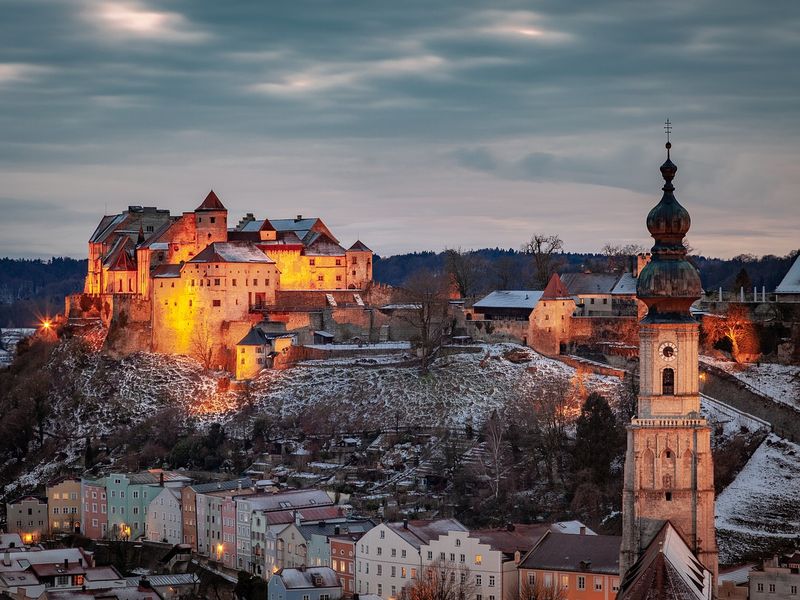
Hotels around Lüdenscheid
Tap the map for prices and availability.
About Lüdenscheid Pride
Lüdenscheid, the district seat of the Märkischer Kreis in the Sauerland region, is best known for its metal and button industries and for "Lichtrouten," its annual light-art exhibition — but in recent years a Pride event has become part of the town's regular calendar too. Behind it now stands its own association, after the earliest editions were carried by a loose alliance of a cultural association, youth outreach groups and local initiatives.
In its public statement, the organisation explicitly invokes the Stonewall uprising and the role trans people played in it. It doesn't want to be reduced to a party atmosphere: party-political stands have no place on site, while cooperation with feminist, anti-racist and anti-fascist groups does. Activism and celebration, in their view, belong together rather than being played off against each other.
Anyone showing up for a Pride weekend in Lüdenscheid finds a town of more than 70,000 people whose municipal charter reaches back to the 13th century. There's no big-city scene here. That's arguably the point: an event that deliberately isn't happening in Cologne, Berlin or Dortmund, but right in the middle of the Sauerland hills.
From one edition to the next, turnout has grown, though it remains modest by design — organisers speak of a few hundred people gathering for the march and the stage programme that follows. For a town this size, that counts as a clear signal that queer life wants visibility beyond the big metropolitan centres too.
About Lüdenscheid
Lüdenscheid, a town of a little over 70,000 people, is the administrative seat of the Märkischer Kreis district in southern Westphalia. The larger Pride events of the region take place elsewhere. People from the area who want to march and be visible usually look to the larger cities on the southern edge of the Ruhr.
The closest major Pride is in Dortmund. A dedicated association organises the event there, with a demonstration through the city, a street festival and an official after-show party in the evening. It takes place in late summer. The organisers collect donations for the event and regularly look for volunteers to help with setting up, the march or the street festival. The Pride Dortmund website lists the theme, the code of conduct for the march and a set of frequently asked questions, and it explains how groups can sign up to take part.
Throughout the year, there is support in neighbouring cities that is closely tied to the Pride movement. Aidshilfe Hagen, the local AIDS service organisation, runs sexual education work with young people and hosts Queerschlag, a youth group for young LGBTIQ people. In Dortmund, the queer youth centre Sunrise offers a youth meeting space as well as counselling for queer, trans and intersex young people, and support for parents and relatives.
For queer people from Lüdenscheid and the surrounding district, this means that Pride is mostly celebrated in Dortmund, while the nearest permanent places for counselling and community are in Hagen and Dortmund. Both cities can be reached from Lüdenscheid by train and bus.
Lüdenscheid Pride – frequently asked questions

Nearby Prides
Essen Pride 2027
Cologne Pride 2027 / ColognePride 2027
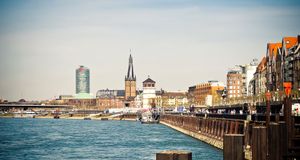
Dusseldorf Pride 2027
Bonn Pride 2027
From the magazine
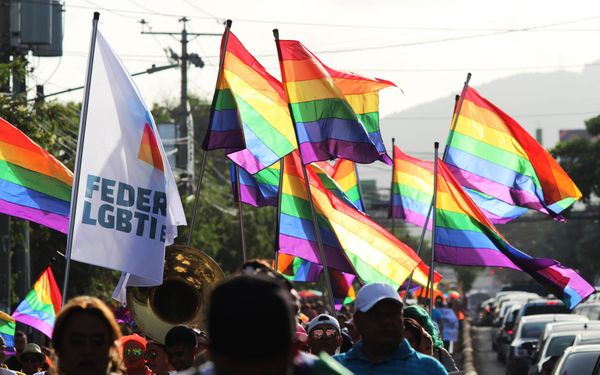
Gilbert Baker and the First Rainbow Flag: Eight Stripes, 1978
How a request from Harvey Milk became the rainbow flag, why it began with eight stripes, and what survives of the two originals.
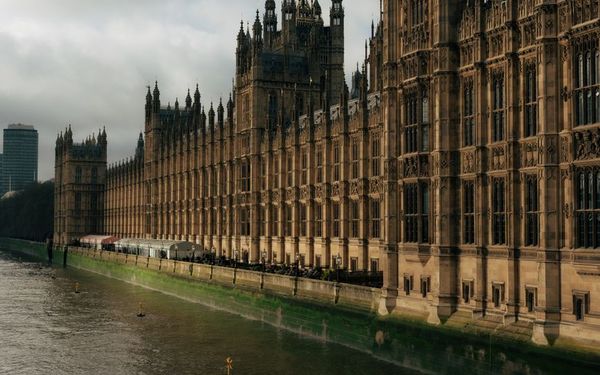
The Wolfenden Report 1957: Why Britain Needed Ten Years to Decriminalise Gay Sex
In 1957 a committee recommended ending criminal penalties for private sex between consenting adult men. The Sexual Offences Act followed only in 1967 and covered just England and Wales.
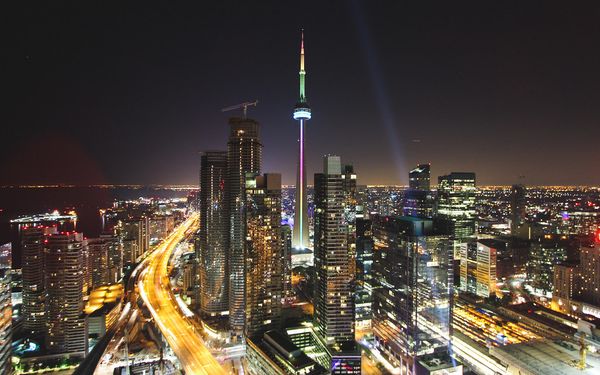
Toronto 1981: The Bathhouse Raids and the Protests Behind Toronto Pride
On 5 February 1981 Toronto police raided four gay bathhouses and arrested close to 300 men. What happened, how the sources count it, and how the protests connect to Toronto Pride.