

2027 date
The date has not been confirmed yet. Expected August 2027
You will find the date here as soon as it is confirmed. Already know it? Let us know.
Hotels around Riesa
Tap the map for prices and availability.
About Riesa Pride
Riesa's Pride is a fairly young event in Saxony, now in its fifth edition. Unlike prides in established scene cities, no registered association stands behind it. A volunteer organising team puts it together every year instead, backed by groups from nearby cities – local Green party branches from Leipzig, for instance, or solidarity groups from Dresden that arrange joint travel to attend.
The day follows a pattern typical of small-town prides: an early-afternoon march with music and speeches along the route, followed by a "diversity market" with information stalls on the grounds of an open youth centre. A party at the same youth centre usually rounds things off. Start and end points have shifted between editions – sometimes the town hall square, sometimes the train station – without a fixed starting point settling in yet.
Members of the organising team have spoken in interviews about how unusual it still feels to see queer life visible in Riesa at all. The event sees itself not just as a celebration but as a political statement in a town that otherwise has little visible queer infrastructure.
Turnout has stayed modest. That sets Riesa's Pride apart from the large parades in Dresden or Leipzig, but it gives the event a more direct atmosphere: most attendees know a good share of the others there. Solidarity groups from nearby bigger cities travel in on purpose, to lend visible support to the smaller gathering.
The main channel for updates is an Instagram account, where dates, meeting points, and programme details get announced – there is no dedicated website. Anyone planning to attend is better off following that account directly rather than relying on older announcements.
About Riesa
In Riesa, a welcoming city in Saxony, Germany, the LGBTQ+ community thrives through vibrant Pride events that celebrate diversity and advocate for equality. Pride parades wind through the city center, featuring colorful floats, music, and participants proudly waving rainbow flags. These gatherings on places like the town hall square draw locals and visitors alike, blending festive atmospheres with calls for acceptance and rights.
The local LGBTQ+ history in Riesa reflects resilience in a traditionally conservative area. Community pioneers have built a supportive network over time, organizing events that foster visibility and solidarity. From small beginnings, these celebrations have grown into inclusive spectacles that highlight personal stories and shared struggles, creating a sense of belonging for queer individuals and allies.
For English-speaking audiences, Riesa's Pride stands out as an authentic slice of German queer culture. Events often include live music, speeches, and diversity markets offering crafts, food, and informational booths. Nearby open youth centers host follow-up parties, providing safe spaces for networking and fun. The parades emphasize themes of love and freedom, resonating universally while rooted in local flavors like Saxon hospitality.
Challenges in the region add depth to these events, underscoring the importance of visibility. Organizers collaborate with youth groups and artists to ensure broad participation, including families and newcomers. Performances range from drag shows to dance routines, infusing energy and creativity. Riesa's Pride not only commemorates global queer milestones but also builds a brighter, more inclusive future for its community, inviting everyone to join the celebration of authentic self-expression.
Riesa Pride – frequently asked questions


Nearby Prides

Dresden Pride 2026

Leipzig Pride 2026

Berlin Pride 2026

Prague Pride 2026
From the magazine
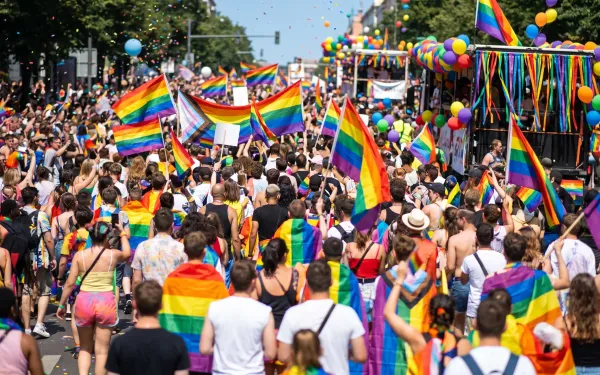
Germany's First Pride (1979): From a Nervous March to a National Tradition
On June 30, 1979, about 450 people marched in Berlin for the first time on the anniversary of Stonewall. A look back at the start of Germany's Pride tradition, the fight against Paragraph 175 and the road to a mass demonstration.
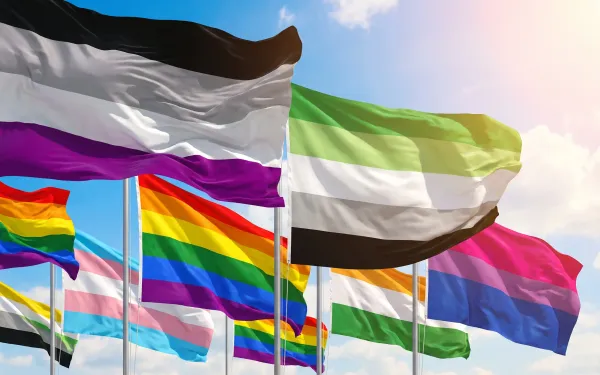
Asexual and Aromantic: What the A in LGBTQIA+ Actually Means
The A in LGBTQIA+ stands for asexual, aromantic and agender, not ally. What these orientations mean, where they differ, and why their visibility at Pride matters.

Pride Anthems: How These Songs Became the Soundtrack of Pride
"I Will Survive," "I'm Coming Out," "Born This Way" turn up at nearly every Pride event. The stories behind how these songs became anthems say a lot about the community that adopted them.