

2027 date
The date has not been confirmed yet. Expected August 2027
You will find the date here as soon as it is confirmed. Already know it? Let us know.
Hotels around Ahaus
Tap the map for prices and availability.
About Ahaus
In Ahaus, Pride is best understood as a local expression of visibility, solidarity, and everyday community life rather than a single large-scale event. The town itself is smaller and quieter than Germany’s major Pride hubs, but that does not mean LGBTQ+ life is absent. Instead, queer people in Ahaus often connect through regional networks, community initiatives, youth work, and cultural activities that create safe and welcoming spaces.
For English-speaking visitors, it is helpful to know that Pride in Germany is closely tied to public education and civic engagement. In a place like Ahaus, the focus is often on inclusion, anti-discrimination, and making queer identities visible in a respectful way. Local Pride activity may take the form of awareness campaigns, discussion events, or collaborations with nearby cities where larger parades and festivals take place. This regional connection gives Ahaus a broader LGBTQ+ context even without a major parade route in the town center.
The local queer history in smaller German towns has often been shaped by discretion, mutual support, and the gradual creation of safer meeting points. That background still matters today. Ahaus can appeal to travelers who prefer a calm base with access to the wider Westphalian region, where more established LGBTQ+ scenes and Pride celebrations are within reach. For visitors, Pride here is less about spectacle and more about community, dignity, and the ordinary freedom to be yourself.
Ahaus Pride – frequently asked questions


Nearby Prides

Essen Pride 2026

Dortmund Pride 2026
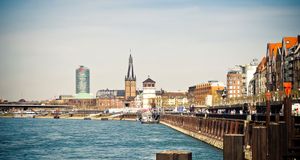
Dusseldorf Pride 2026

Cologne Pride 2026
From the magazine
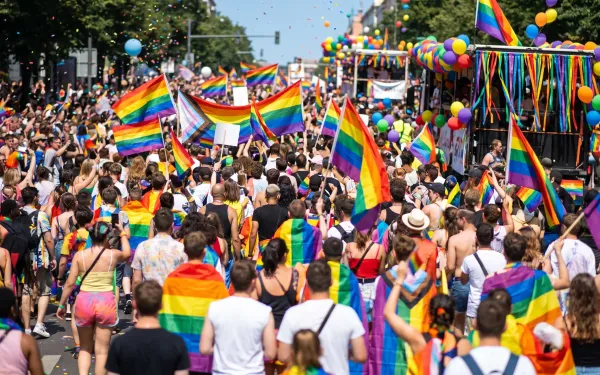
Germany's First Pride (1979): From a Nervous March to a National Tradition
On June 30, 1979, about 450 people marched in Berlin for the first time on the anniversary of Stonewall. A look back at the start of Germany's Pride tradition, the fight against Paragraph 175 and the road to a mass demonstration.
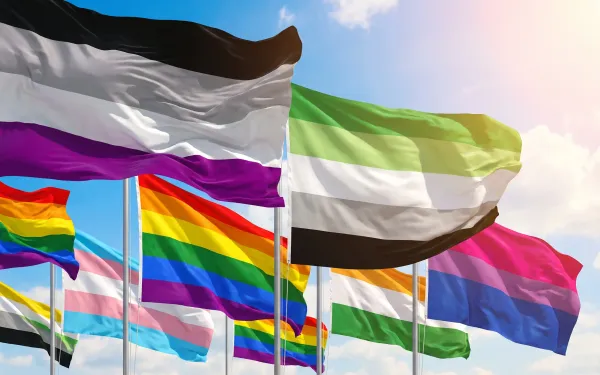
Asexual and Aromantic: What the A in LGBTQIA+ Actually Means
The A in LGBTQIA+ stands for asexual, aromantic and agender, not ally. What these orientations mean, where they differ, and why their visibility at Pride matters.

Pride Anthems: How These Songs Became the Soundtrack of Pride
"I Will Survive," "I'm Coming Out," "Born This Way" turn up at nearly every Pride event. The stories behind how these songs became anthems say a lot about the community that adopted them.